


Hospitality-inspired design is reshaping workplaces, airport lounges, retail environments and commercial interiors. The difference lies where luxury, comfort and durability meet.
Today, some of the most interesting hospitality spaces are appearing far beyond the traditional hotel environment. They are found in workplace lounges, reception areas, executive floors and collaborative spaces. They are in airports, premium retail environments and customer experience centres. They exist wherever people are being welcomed, encouraged to stay, connect, work, relax or simply feel comfortable. That distinction is important to us.
Our approach to hospitality spaces is not about furnishing hotels for the sake of entering another sector. It is about bringing the qualities we associate with great hospitality environments: comfort, warmth, character, tactility and a sense of welcome, into commercial spaces that also demand exceptional levels of performance and durability.
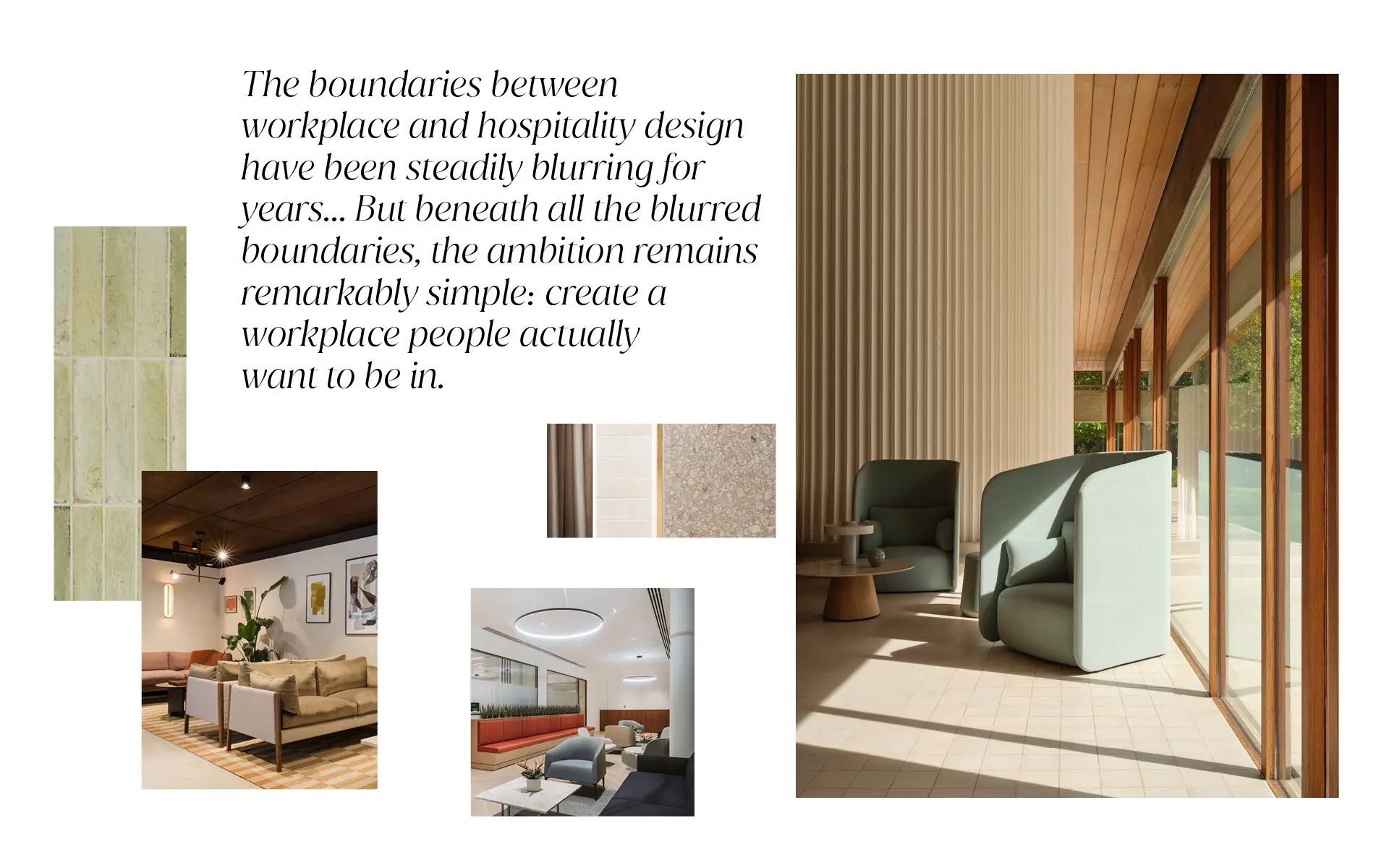
The Hotelification of the Workplace
The boundaries between workplace and hospitality design have been steadily blurring for years. Sometimes described as the hotelification of the workplace, this movement reflects a fundamental change in what people expect from commercial interiors.
The traditional workplace was designed around clearly defined functions. Desks were for working. Meeting rooms were for meetings. Reception was somewhere you passed through on the way to somewhere else. Today, those distinctions are much less rigid.
A workplace lounge might support an informal meeting in the morning, individual work before lunch and a social gathering later in the day. A café space can become somewhere to collaborate. A reception area can become a place to meet, work or pause.
This evolution builds on the thinking that underpins our Destination Spaces ethos; if people can complete many individual tasks at home, the physical workplace has to offer something more. It needs to be interesting, warm, human and capable of supporting different experiences throughout the day.
That means creating spaces people actively want to use rather than simply providing somewhere they are expected to be.
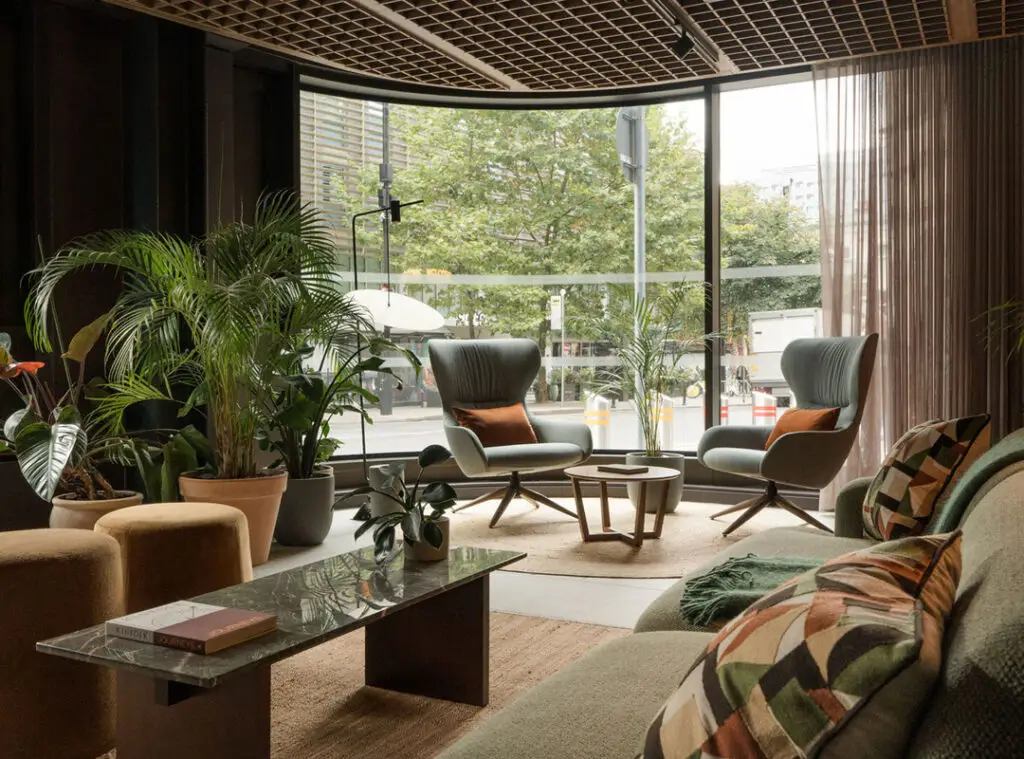
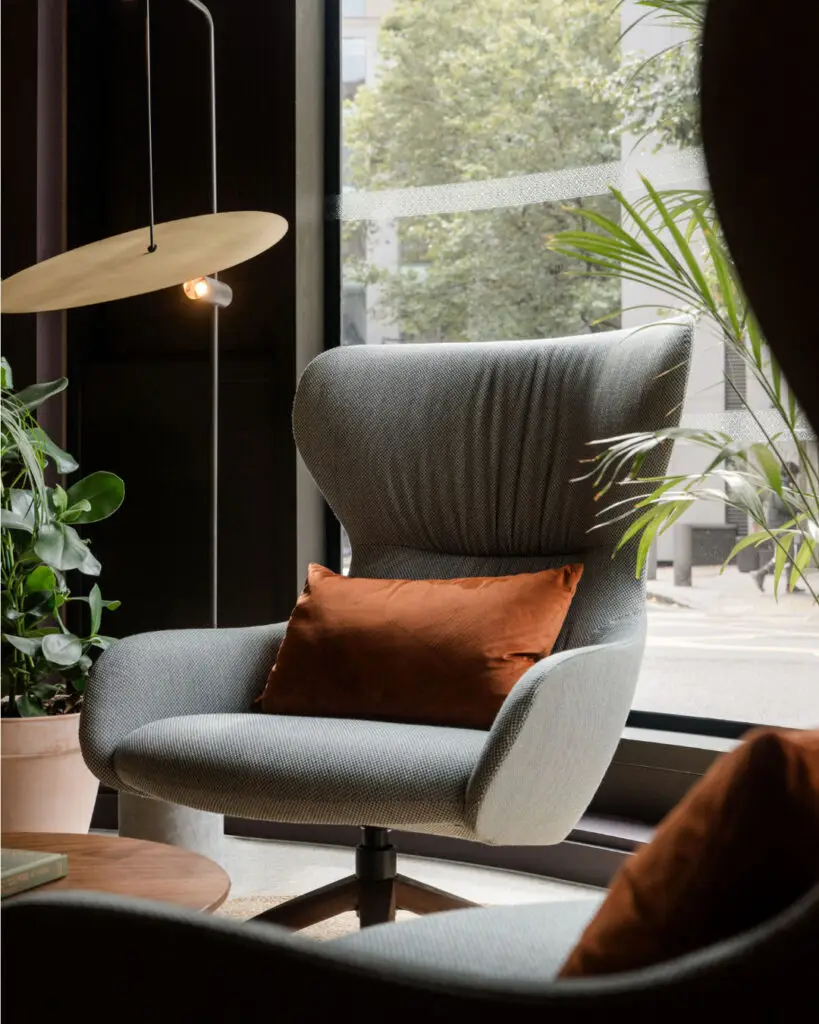
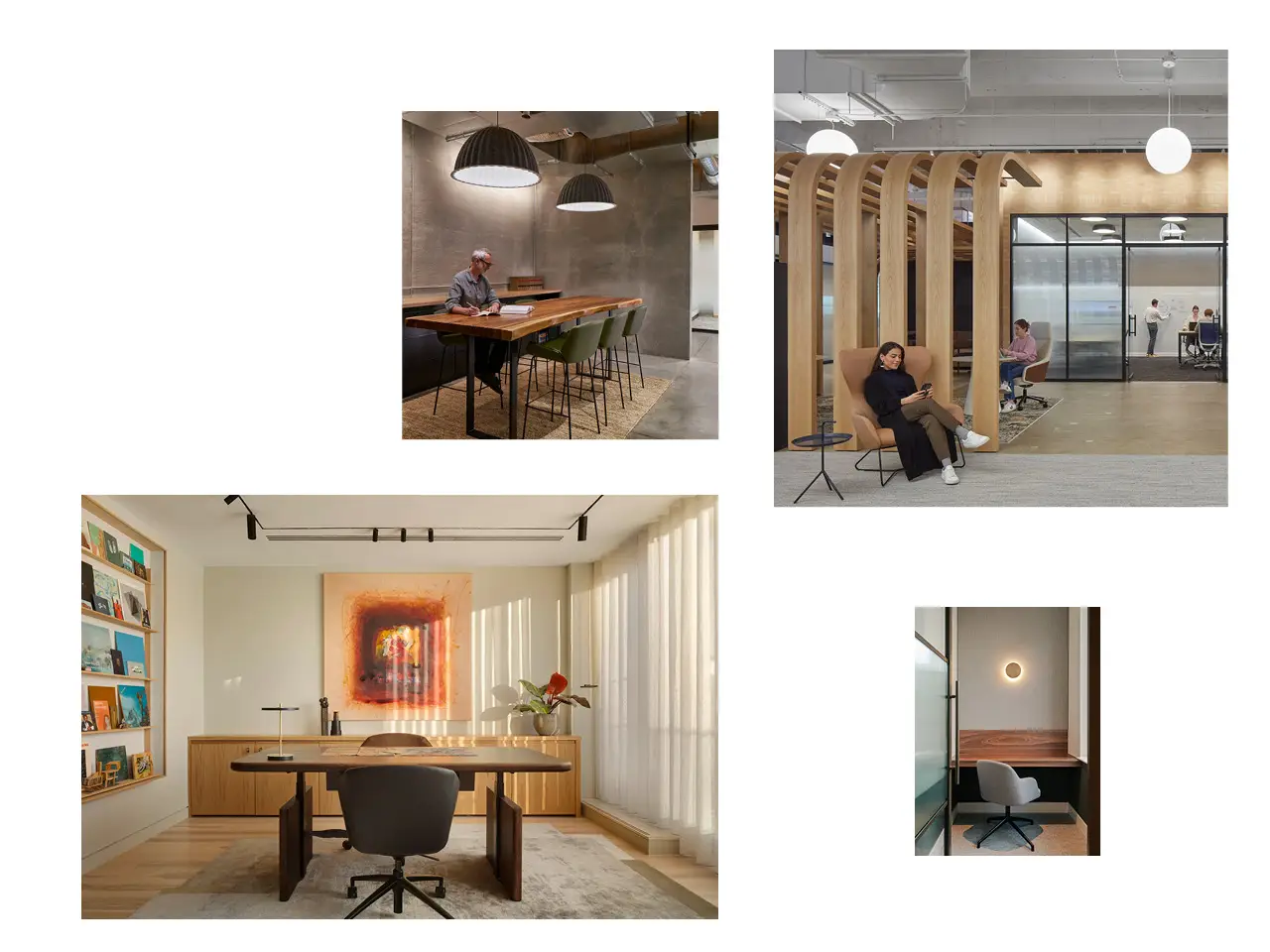
From workplace to destination
The best hospitality environments understand something fundamental about human behaviour; people remember how a space makes them feel. That same principle is increasingly shaping our modern workplace.
Comfort matters. So does lighting, material, acoustics and texture. The arrangement of furniture can encourage conversation or provide privacy. A change in seating height can signal a different type of interaction. Upholstered furniture can soften architecture and create intimacy within larger commercial spaces.
Our earlier thinking around “Moments that Matter” described the workplace as an experiential environment, with spaces for focusing, collaborating, meeting, refuelling and socialising rather than one repetitive setting.
Hospitality thinking takes that idea further. Instead of designing purely around activity, we begin designing around experience.
How should someone feel when they arrive? Where do we want them to linger? Where will conversations naturally happen?
Where can someone find a quieter moment? And what makes the journey through the space feel intuitive and enjoyable
These are hospitality questions, but increasingly they are also workplace questions.
Hospitality beyond hotels
This is why our definition of hospitality environments extends much further than the traditional hospitality sector.
Hospitality in the workplace
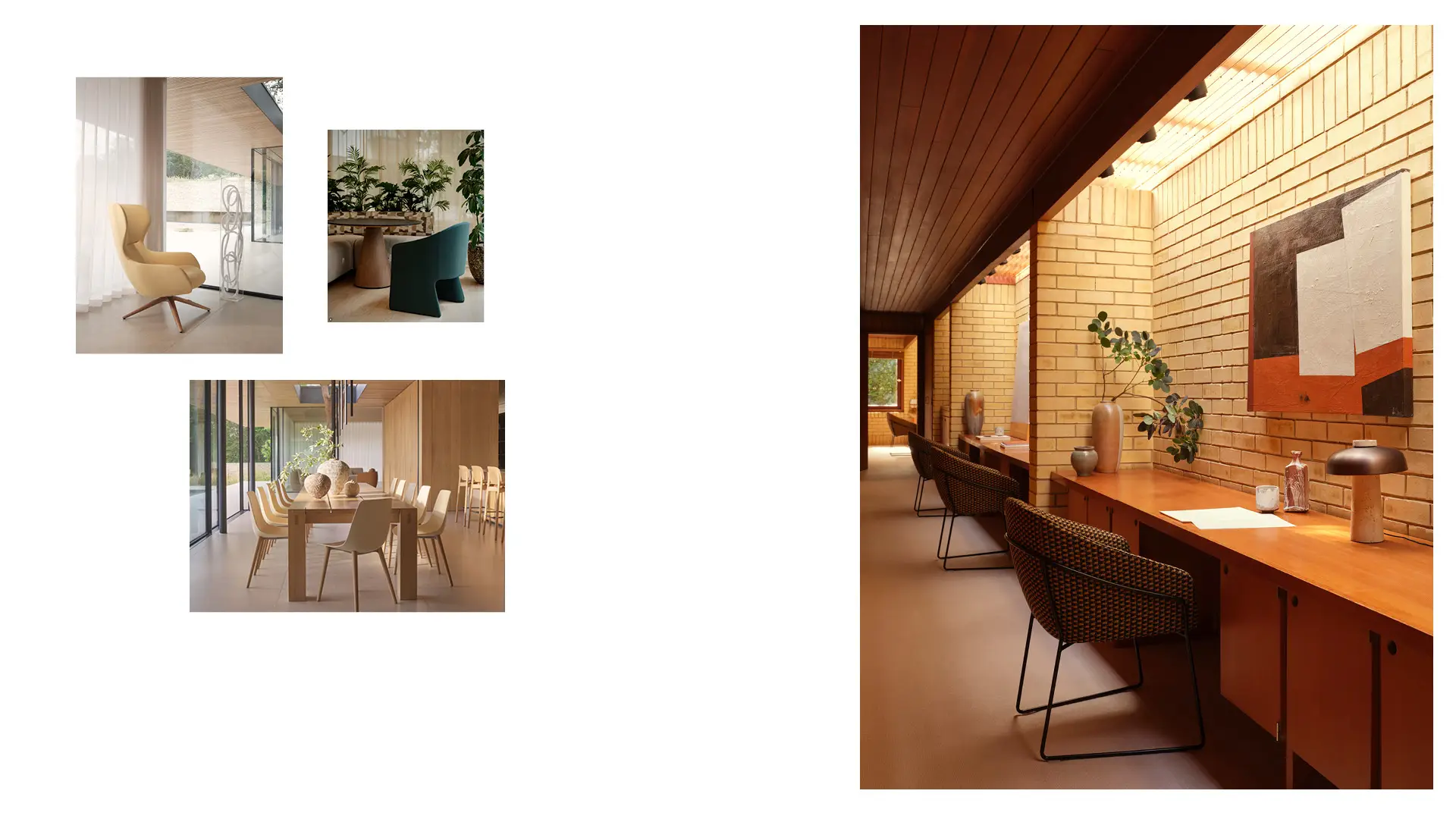
Workplaces increasingly contain spaces that would once have looked more at home in a boutique hotel or members’ club. Executive lounges, workplace cafés, touchdown spaces, reception areas, informal meeting settings and social hubs all borrow from hospitality design. The objective is not to make an office look like a hotel. It is to create a more generous experience of work. Furniture plays an important role in that transition. Softer forms, richer materials and more residential proportions can create warmth, while carefully considered ergonomics ensure those spaces remain useful throughout the day.
Airport lounges
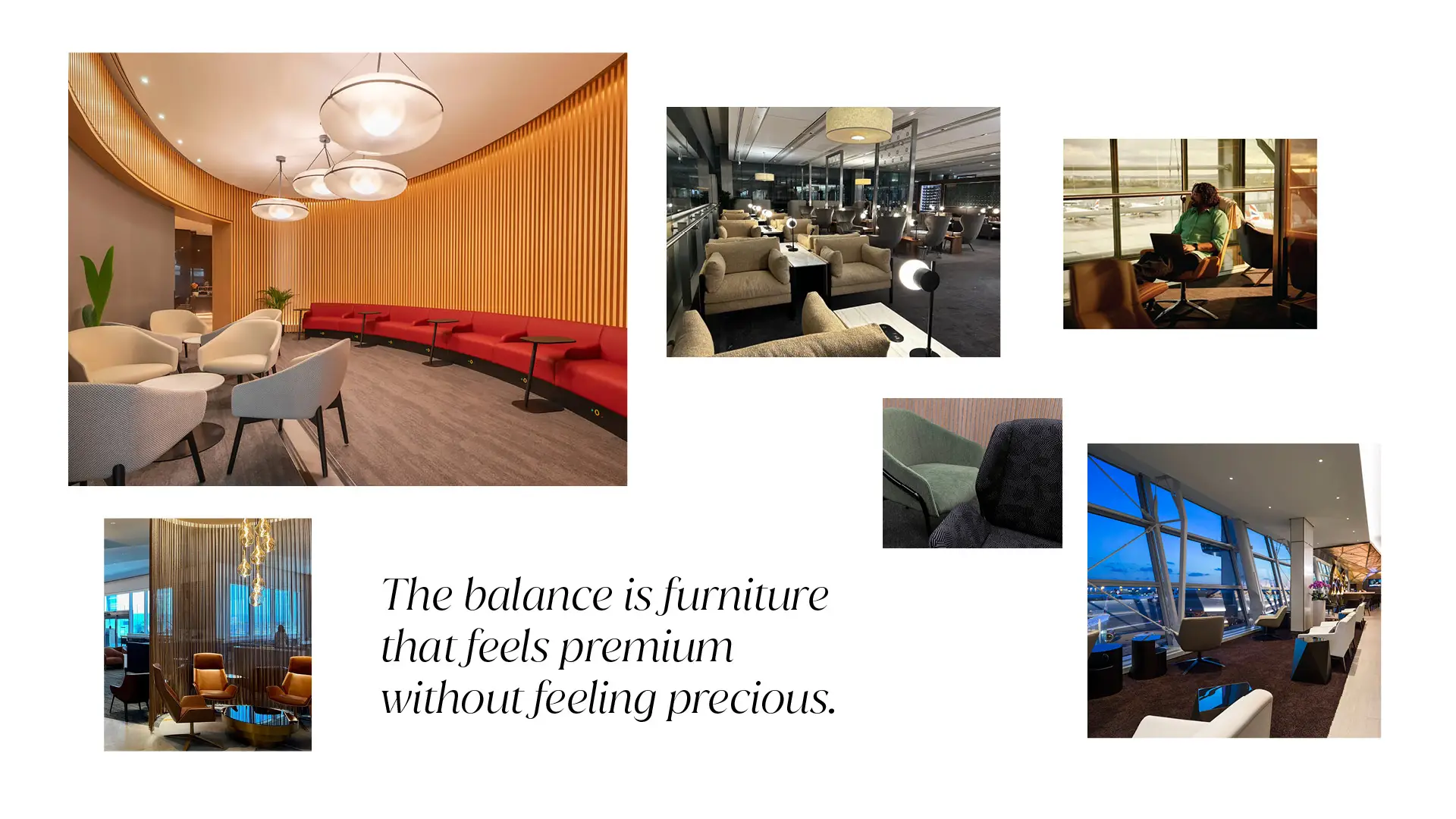
Few environments demonstrate the combination of hospitality and commercial performance more clearly than the airport lounge. People might eat, work, meet, recharge devices, take a call or rest , sometimes all within the same hour. Furniture therefore needs to deliver immediate comfort while coping with intensive use.
It must feel premium without becoming precious. That combination of luxury and durability is central to the way we approach commercial hospitality furniture.
Retail and customer environments
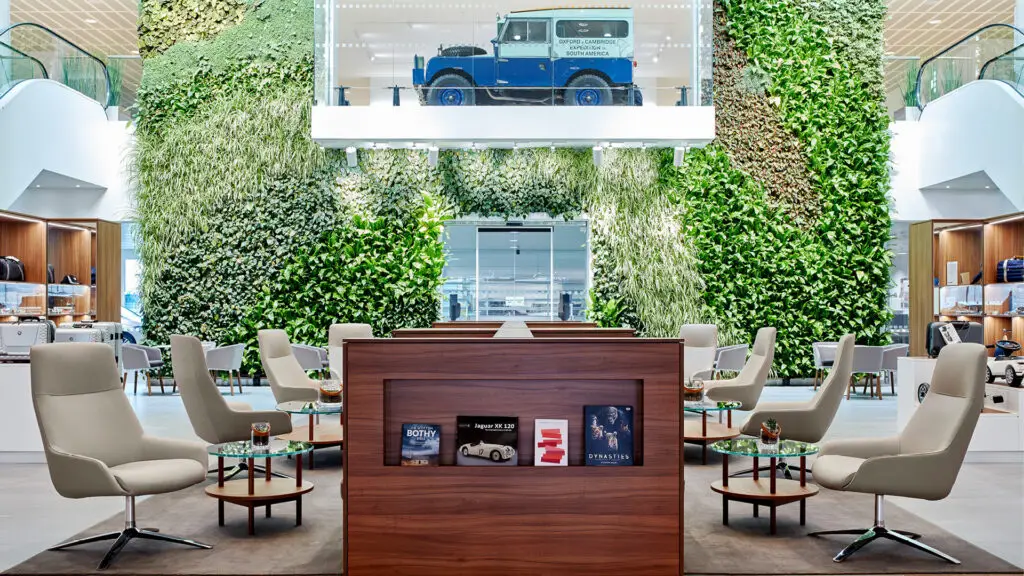
Retail is also becoming increasingly experiential. For premium brands in particular, stores are no longer simply transactional spaces. They are environments where customers spend immersive time with a brand. Furniture can slow the pace of the experience, create opportunities for conversation and give people somewhere comfortable to pause. The same principle applies to showrooms, automotive environments, customer experience centres and other branded commercial interiors. Hospitality becomes a way of communicating how an organisation values the people entering its space.
Designing different reasons to stay
The shift towards hospitality-inspired commercial interiors reflects a broader change in the purpose of physical space. In the workplace especially, the question is no longer simply, where will people work? It is, why will people choose to be here?
Sometimes the answer is collaboration. Sometimes it is concentration, access to colleagues, technology or expertise. And sometimes it is simply because the environment offers something enjoyable that cannot be replicated around the kitchen table.
This is where hospitality has something important to teach workplace design. The best hospitality spaces create reasons to stay. They make people feel welcome, offer different experiences within a single environment and recognise that comfort and beauty are not superficial additions, they are fundamental to how a space is experienced.
For us, hospitality is therefore more than a market category. It is an approach to commercial design: bringing together residential comfort, hospitality refinement and the resilience demanded by workplace, airport and retail environments.
That means furniture that feels relaxed and intuitive, but is engineered for long-term use. Furniture that supports not just a function, but an experience. The spaces may be different, but the requirement is remarkably consistent:
Create somewhere people want to be, and design it to last.

