


Designer Story
You worked on the project for the original Brooke tables – what was that process like?
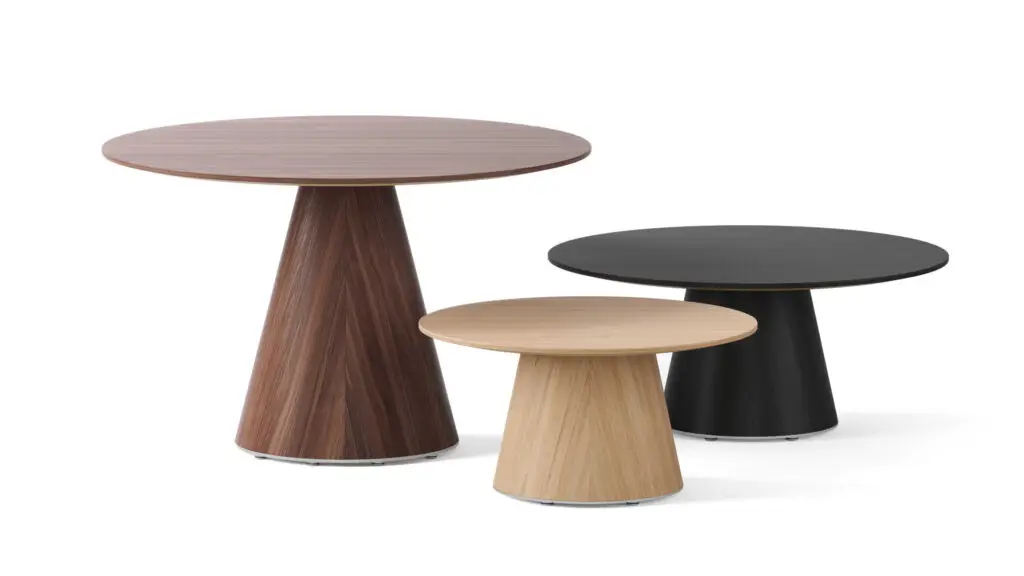
This was a relatively straightforward development process. The challenge was to design interesting features to the cone profile to reveal subtle edge details and seamless joints. Working with multiple suppliers and a variety of materials meant that production tolerances had to be resolved to keep the overall visual as clean and consistent as possible.
Did you take inspiration from any particular influences or sources?
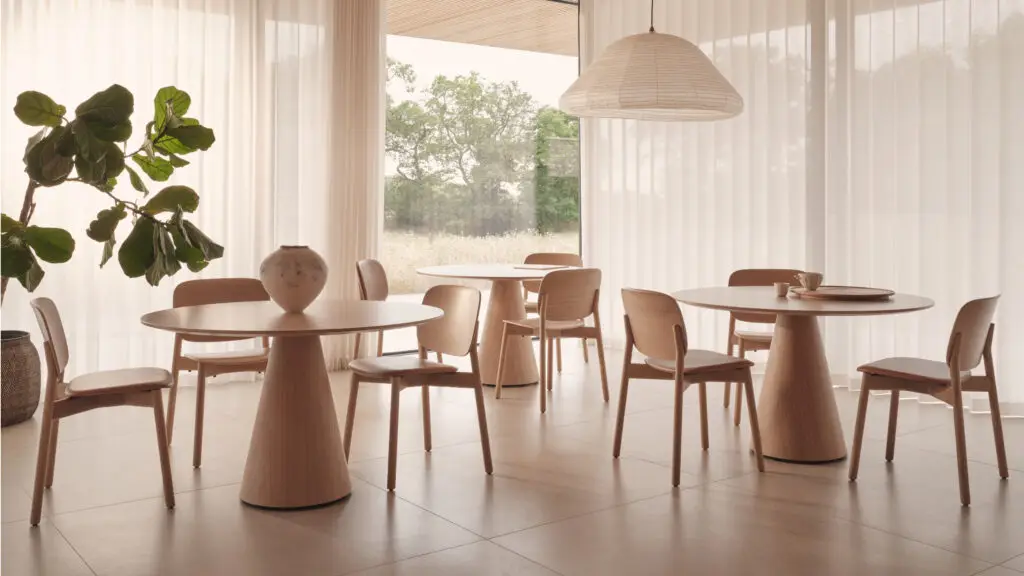
Circles are always very appealing and give reliably adaptable forms for all environments. It’s an arrangement that welcomes you to the discussion, facilitating natural eye contact with everyone seated at the table. The cone silhouette was the most harmonious shape for the base, in order to complement the many varieties of table-tops and seating that we offer alongside Brooke.
What prompted this new phase of design for the Brooke twin ped?
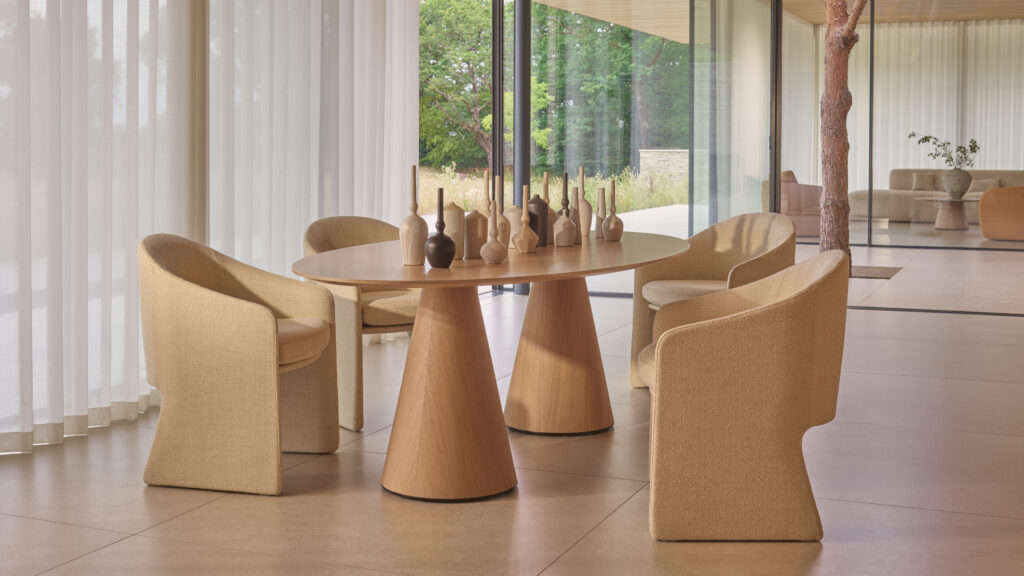
From developing the single pedestal range we realized that this could also be expanded into larger table-top sizes to suit the increasing trend of natural and organic working environments that require more power and connectivity options. Splitting and extending the cone shape into an oval was a natural progression to create a visually striking table that could still be produced in a multitude of finishes.
What are you most proud of regarding being part of designing Brooke?
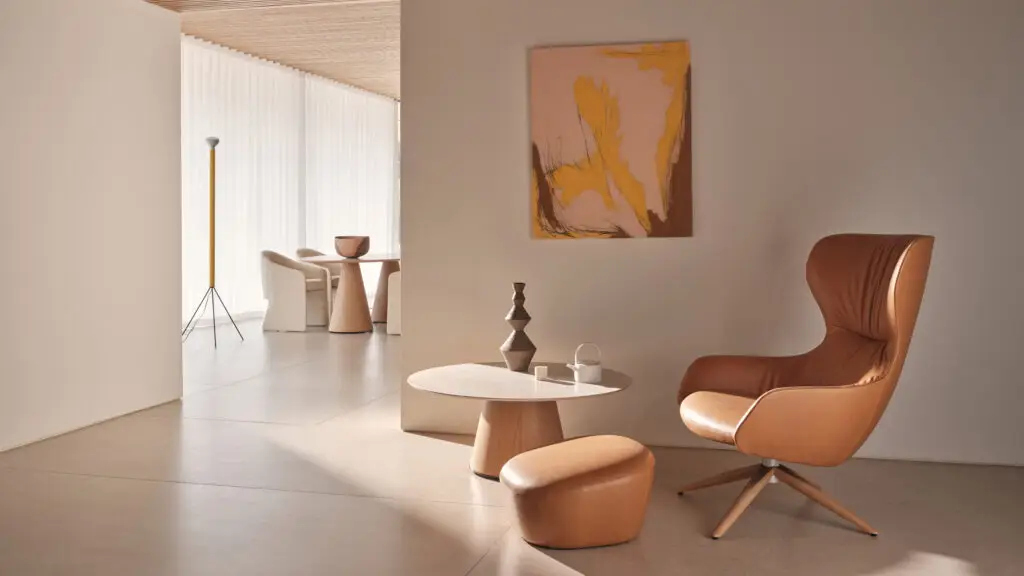
It is always challenging to do the simple things well as there is nowhere to hide. A marker of success to me is also still creating levels of interest and adaptability using such a classic form – this I believe has been achieved effectively with the Brooke range.
Discover the Brooke Collection
Boss Design | 26

